Best Submersible Well Pump for Deep Well Water Systems
Choosing the right equipment for your home is essential for maintaining a reliable water supply, especially when dealing with a deep well. This comprehensive guide will help every homeowner navigate the complexities of modern water systems to ensure uninterrupted access to clean water.
Understanding Submersible Well Pumps
What is a Submersible Well Pump?
A submersible well pump is a specialized device designed to operate completely underwater inside the well casing, unlike a surface jet pump. Because it is submerged, the pump does not need to prime and can efficiently push water up from great depths directly into a pressure tank for your household needs.
How Deep Well Submersible Pumps Work
These units utilize a sealed electric motor attached to a multi-stage impeller design that spins rapidly to draw water and build significant psi. As the motor runs underwater, it forces water upward through the discharge pipe, overcoming the extreme well depth and gravity to deliver consistent water pressure.
Advantages of Submersible Water Pumps
Submersible water pumps offer incredible durability and quiet operation because they are housed in robust stainless steel or cast iron materials beneath the surface. Their unique design minimizes the risk of cavitation, providing a dependable water flow with a long lifespan that easily outperforms traditional above-ground alternatives.
Types of Deep Well Pumps
When evaluating different options for your home, understanding the various types of equipment available is crucial for a successful installation. A standard well pump comes in multiple configurations depending on your well depth, daily water demand, and overall household needs. Selecting the correct model ensures that your water supply remains steady, while also preventing excessive wear and tear on the motor over its expected lifespan.
Comparison of Submersible and Jet Pumps
When comparing systems,
a submersible pump is installed entirely underwater inside the well casing
, allowing it to efficiently push water upward through the discharge pipe. In contrast, a jet pump sits above ground and must draw water using suction, which limits its effectiveness at greater depths.
| Feature | Submersible Pump | Jet Pump |
|---|---|---|
| Location | Underwater inside the well casing | Above ground |
| Operation & Performance | Operates silently; delivers superior psi for deep applications | Requires manual priming; tends to be noisier; limited at greater depths |
Choosing the Right Deep Well Submersible Pump
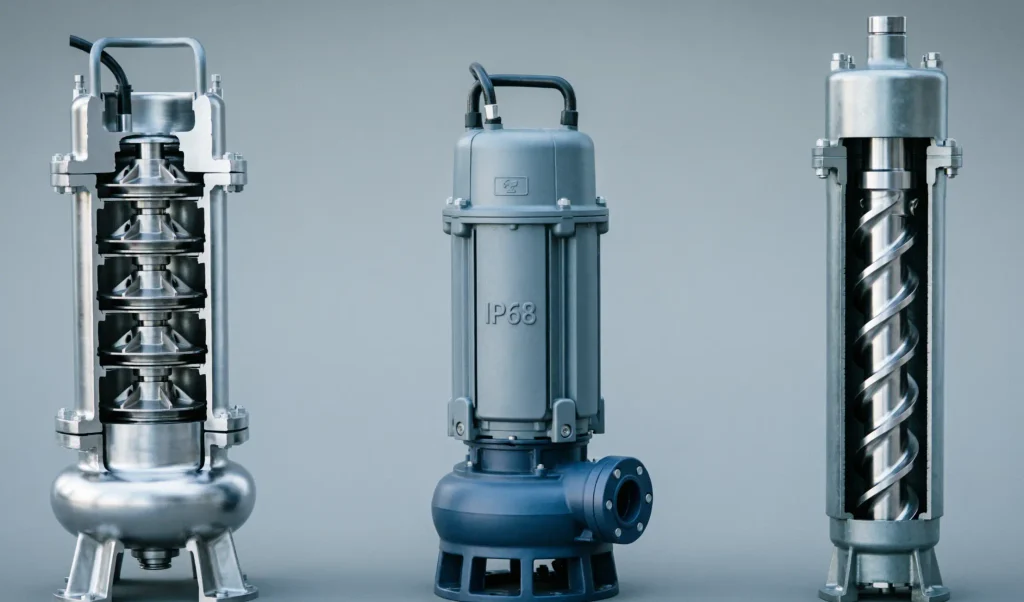
Choosing the right deep well submersible pump requires careful calculation of your total well depth, desired gallons per minute, and overall household water demand. You must evaluate the horsepower, such as a 1 hp or 2 hp motor, alongside the casing diameter to ensure a proper fit. Investing in a durable stainless steel or cast iron unit guarantees reliable water transfer, consistent water pressure, and dependable operation for up to 15 years.
Electric vs. Portable Submersible Pumps
An electric submersible pump is permanently wired into your underground electrical system to provide continuous residential water supply without requiring attention. On the other hand, a portable submersible water pump, often equipped with a power cord, is designed for temporary tasks like draining a sump, handling sewage, or managing emergency water transfer. While permanent units focus on deep well longevity, portable options offer unmatched versatility for various utility drainage needs around your property.
Buying Guide for Submersible Well Pumps
Navigating the marketplace to find the ideal submersible pump requires careful evaluation of your home’s water needs, the well depth, and the required gallons per minute. When utilizing this comprehensive buying guide, every homeowner should examine the motor horsepower, ranging from a standard 1 hp to a powerful 2 hp configuration, alongside the casing diameter to guarantee a seamless fit inside the underground well before making a final purchase.
Key Features to Consider
When reviewing potential models, pay close attention to construction materials like stainless steel or cast iron, which ensure exceptional durability and resistance against corrosion over a 15-year lifespan. Additionally, verify that the unit includes the following key features:
- an integrated check valve to prevent backflow
- a robust multi-stage impeller for optimal psi generation
- reliable wiring capabilities that support efficient and quiet operation deep underwater
Recommended Brands and Models
Many homeowners prefer industry-leading manufacturers known for engineering high-performance equipment that delivers consistent water pressure and superior lift capabilities under extreme conditions. Exploring reputable options, such as a heavy-duty Vevor submersible well pump, allows you to secure a dependable water supply, minimize sediment interference, and enjoy uninterrupted residential water flow without experiencing excessive mechanical wear over time.
Where to Buy Your Submersible Pump
Purchasing your deep well pump from certified plumbing supply stores, authorized online dealers, or specialized manufacturer websites ensures you receive genuine parts and valid warranties. Before finalizing the transaction, confirm that the selected water pump matches your specific well depth and daily water demand, ensuring your investment provides maximum efficiency and long-lasting performance for your household.
Installation and Maintenance
Installation Guidelines for Deep Well Pumps
Proper installation of a deep well submersible pump requires careful handling of its core components. To install the unit successfully, you must complete the following steps:
- Secure the heavy-duty power cord and attach the drop pipe securely to the discharge.
- Carefully lower the unit into the casing.
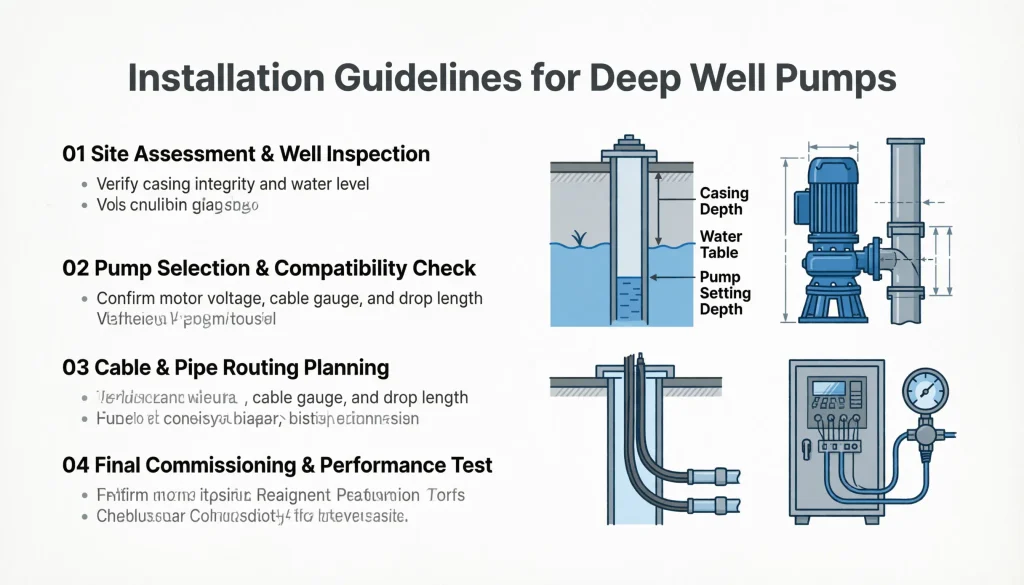
Ensuring the system is correctly plumbed to your pressure tank prevents operational failures, guarantees steady water transfer, and establishes a robust foundation for maintaining a reliable home water supply for years.
Common Issues and Troubleshooting
Homeowners occasionally encounter operational challenges such as reduced water flow, fluctuating psi, or electrical faults caused by damaged wiring, worn impellers, or clogged check valves. Systematically troubleshooting these common problems by inspecting the control box, testing the motor amperage, and verifying the water level ensures you can quickly restore your submersible well pump to peak working condition.
Maintenance Tips for Long-lasting Performance
To extend the operational lifespan of your deep well submersible pump, schedule routine inspections of the electrical components, monitor the pressure tank functionality, and test the water quality for excessive sediment buildup. Performing these proactive maintenance steps prevents unexpected system failures, protects the internal motor, and guarantees your water pump continues delivering clean and consistent well water.