An oil change keeps your engine’s moving parts lubricated, cool, and free of the sludge that builds up as motor oil breaks down over time. Skip too many, and the wear adds up quietly until a costly repair forces the issue.
Most owners have a rough number in their head, maybe 3,000 miles, maybe 5,000. That number is often outdated for your specific vehicle, and sticking to it too rigidly can mean paying for service you don’t need yet, or worse, waiting too long between visits.
Your owner’s manual and your car’s oil-life monitor are more reliable guides than any generic mileage rule, and knowing how to read both puts you in control of the schedule instead of guessing. This piece walks through when oil actually needs replacing, what a shop is doing during that 20-minute wait, which oil fits your engine, what a fair price looks like, and how to avoid paying for work you didn’t ask for.
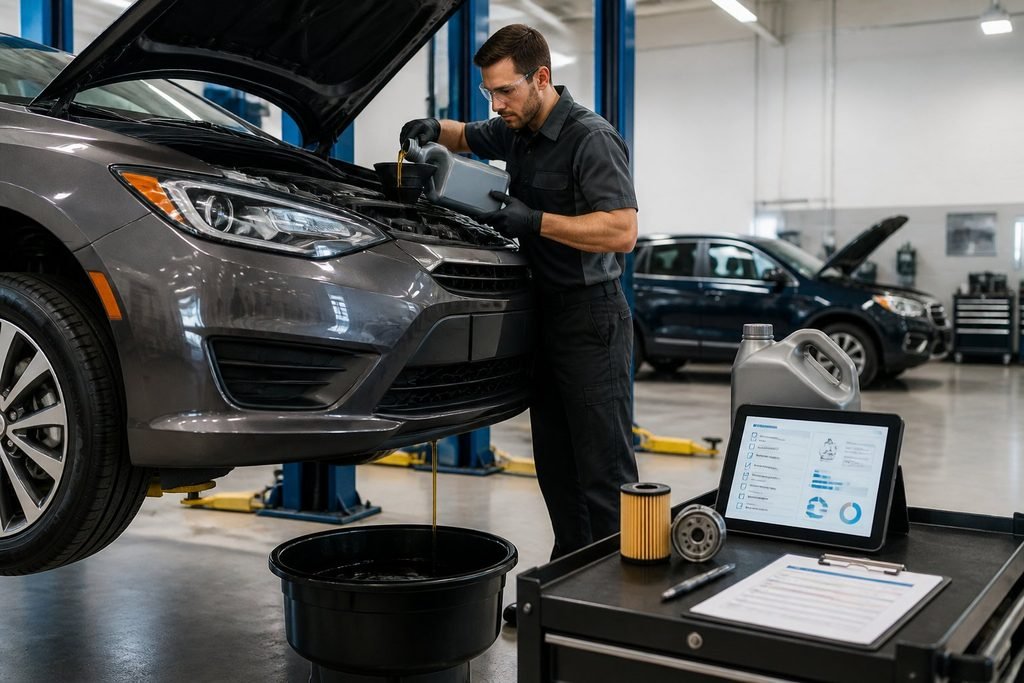
When Does Your Car Need Fresh Engine Oil?
Your car needs fresh oil when the manufacturer’s schedule or the built-in oil-life monitor tells you it’s due, not at a fixed mileage number picked out of habit. Regular oil changes protect the engine because motor oil breaks down chemically over time, losing its ability to lubricate and carry away heat, which eventually hurts fuel efficiency and increases wear on internal parts.
Follow the Owner’s Manual and Oil-Life Monitor
Check your manual first. It lists the exact interval your manufacturer engineered the engine around, and that number reflects real testing on your specific model, not a generic industry average.
Most modern vehicles call for service somewhere between 5,000 and 10,000 miles, with some full-synthetic setups stretching further, according to a guide on real-world oil change timing. The old 3,000-mile rule dates back to a time before higher-grade oils and tighter-tolerance engines, and it rarely applies to cars built in the last decade, as AutoZone explains in its comparison of time versus mileage.
If your dashboard has an oil-life percentage instead of a simple light, trust it. That monitor calculates wear based on your actual driving, engine temperature, and trip length, which is more precise than any flat mileage figure.
Warning Signs You Should Not Ignore
Between scheduled checks, a few signals mean don’t wait for the reminder light. Dark, gritty oil on the dipstick, a burning smell, louder engine noise, or an oil-change light that’s already on all point to oil that’s overdue.
How Driving Conditions Change the Interval
Short trips, stop-and-go traffic, towing, and extreme heat or cold all count as severe driving conditions, and they shorten the safe interval. An engine that never fully warms up on five-minute drives builds up more moisture and unburned fuel in the oil than one that runs steady highway miles, so if that describes your commute, plan on the shorter end of your manufacturer’s range.
What Happens During an Oil Change Service?
An oil change service centers on draining old motor oil and replacing the oil filter, but a full visit usually includes a broader check of fluids and safety items. Knowing what’s supposed to happen helps you tell a thorough job from a rushed one, and it gives you a clear picture of what you’re paying for.
Replacing Motor Oil and the Oil Filter
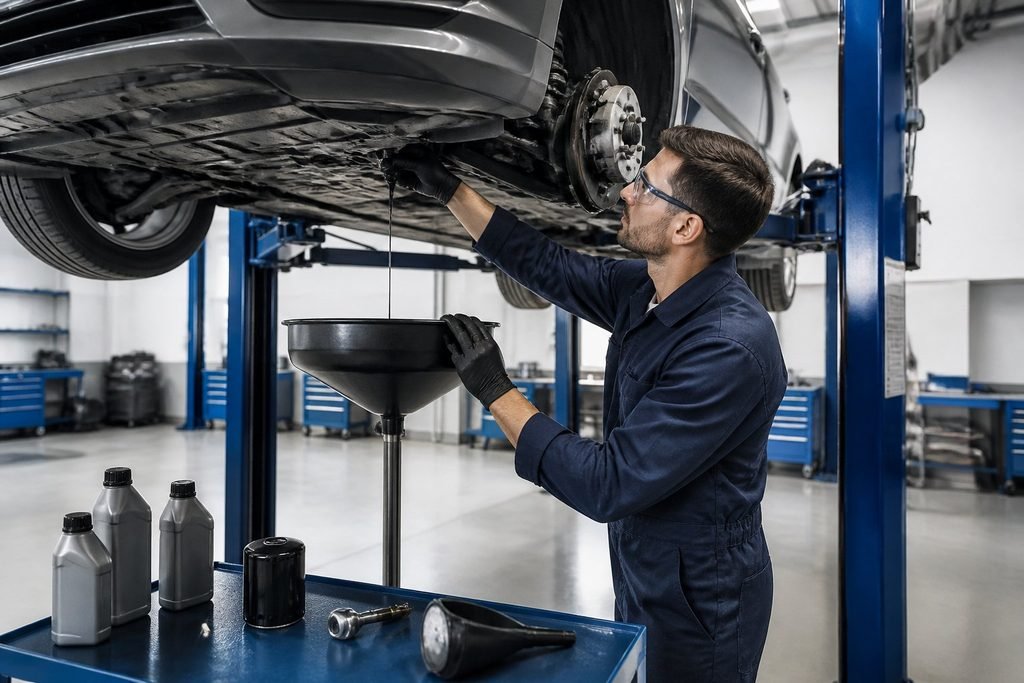
The technician drains the old oil from the crankcase, swaps in a new oil filter, and refills the engine with the specified oil type and quantity. This is the core of every visit, and it’s the one part that must happen correctly every time, since a poorly seated filter or wrong oil volume causes real problems within days.
Inspections and Fluid Top-Offs
A thorough oil change service typically checks brake fluid, coolant, power steering fluid, and washer fluid, topping off anything low, as noted in an overview of what a full-service oil change includes. Technicians commonly also glance at belts, hoses, and the air filter during this window, since the car is already up on the lift.
Ask which of these were actually checked. A written or printed inspection sheet, not just a verbal “everything looks good,” gives you something to reference later.
Tire Pressure Checks and Maintenance Resets
Tire pressure gets checked and adjusted to the number listed on your door jamb, and the service reminder light gets reset once the new oil is in. If your tire pressure warning light stays on after a visit, that’s worth flagging before you leave the lot.
Which Type of Motor Oil Does Your Vehicle Need?
Your vehicle needs the oil type and viscosity grade listed in the owner’s manual, whether that’s conventional, synthetic blend, or full synthetic. Using the wrong specification can affect fuel efficiency and long-term engine wear even if the oil looks and pours the same as the correct one.
Conventional, Synthetic Blend, and Synthetic Oil
Conventional oil is refined from crude petroleum and costs less, but it breaks down faster under heat and stress. Synthetic blend combines conventional oil with synthetic base stocks for improved protection at a moderate price, while full synthetic oil resists breakdown at high temperatures and generally supports longer intervals between changes, a distinction Take 5 lays out across the four common oil categories.
| Oil Type | Typical Cost | Best For |
|---|---|---|
| Conventional | Lowest | Older, simpler engines, low-mileage drivers |
| Synthetic Blend | Moderate | Daily drivers wanting extra protection without full synthetic price |
| Full Synthetic | Highest | Modern engines, turbocharged models, extreme temperatures |
| High-Mileage | Moderate to high | Engines over 75,000 miles |
Choosing the Correct Viscosity and Specification
Viscosity grades like 5W-30 or 0W-20 describe how the oil flows at cold and hot temperatures, and using the wrong grade can affect cold-start protection or high-temperature film strength. Check the cap under your hood or the manual for the exact grade and API specification your engine requires, and don’t let a shop substitute a close match without asking first.
High-Mileage Oil for Older Engines
High-mileage oil is formulated with additives that condition seals and reduce minor leaks in engines past roughly 75,000 miles. It won’t reverse existing wear, but it can help an aging engine run cleaner and lose less oil between changes.
How Much Does an Oil Change Cost?
An oil change typically costs between $35 and $75 for conventional oil, with full synthetic service often running higher, according to Kelley Blue Book’s oil change pricing overview. Some estimates for dealership or specialty service run considerably higher, with RepairPal placing average costs between $160 and $188 depending on the vehicle and region.
What Affects the Total Price
The type of oil, how many quarts your engine holds, and the oil filter itself all factor into the final bill. Firestone Complete Auto Care notes that newer vehicles can also cost more to service since some engine layouts require extra labor to access the filter or drain plug.
When a Quick Service Is Worth It
A quick oil change service makes sense when your car needs routine, uncomplicated maintenance and you value speed over a deep inspection. These locations move fast, often in 15 to 20 minutes, which works well for drivers sticking to a straightforward schedule without other issues to flag.

Avoiding Unnecessary Add-Ons
Ask for the price of the base service before agreeing to anything else. If a technician recommends additional repair services, request specifics: what’s failing, why it’s urgent, and whether it can wait until your next scheduled visit. A legitimate shop explains the reasoning and shows you the part or fluid in question rather than pressuring you to approve work on the spot.
Where Should You Get Your Oil Changed?
You can get your oil changed at a dealership, an independent shop, a quick-service chain, or in your own driveway, and each option trades off price, speed, and depth of service differently. The right choice depends on how much time you have, whether your car is under warranty, and how comfortable you are asking questions about what’s being done.
Dealerships, Independent Shops, and DIY Options
Dealerships know your specific make well and use manufacturer-specified parts, though prices run higher. Independent shops often cost less while still offering a personal relationship with a mechanic who remembers your car’s history.
DIY oil changes save money and teach you the basics of your engine, with step-by-step guidance available from AutoZone for owners willing to get under the car. Keep in mind that by law, dealership service isn’t required to keep a new-car warranty valid, as Autotrader confirms, so independent shops remain a legitimate option even for newer vehicles.
What to Look for in Oil Changers
Good oil changers document the service, including oil type, quantity, and mileage at time of service, on paper or in an app. Ask about their filter brand, whether they check tire pressure and fluids as standard, and whether they’ll show you the old oil or filter if you want to see it.
Comparing Jiffy Lube and Other Quick-Service Providers
Jiffy Lube and similar drive-through chains like Take 5 emphasize speed, often advertising services completed while you stay in the car. These locations work well for straightforward, routine visits, but they tend to push additional services more than a shop you visit regularly, so go in knowing your car’s actual needs before you arrive.
| Option | Speed | Typical Price Range | Depth of Inspection |
|---|---|---|---|
| Quick-Lube Chain | Fastest (10-20 min) | $35-$75 conventional | Basic |
| Independent Shop | Moderate | $35-$100+ | Moderate to thorough |
| Dealership | Slower, appointment-based | $75-$150+ | Thorough, brand-specific |
| DIY | Varies | Cost of oil and filter only | Self-directed |
Keep Your Engine Protected Between Service Visits
Checking your oil level and watching for leaks between appointments catches problems before they become expensive ones. A few minutes with a dipstick or a glance under your parking spot tells you more than waiting for a dashboard warning light.
Check the Oil Level and Watch for Leaks
Pull the dipstick monthly, especially before a long trip, and look at both the level and the color. Oil that’s dark and gritty or noticeably low between changes suggests either heavy consumption or a leak worth having inspected before your next scheduled oil change.
Pair Oil Care With Tire Rotation
Many shops schedule tire rotation alongside oil changes since the car is already lifted, and doing both together saves you a separate visit. Rotating tires evenly spreads tread wear, which keeps handling predictable and gets more life out of a set of tires.
How Clean Oil Supports Fuel Economy
Clean oil reduces friction between moving engine parts, and less friction means the engine burns less fuel to do the same work. Letting oil run old and dirty past its interval can quietly reduce fuel efficiency, even if the car still drives normally.
Following the Right Schedule Protects Your Engine
Sticking to your manufacturer’s interval or oil-life monitor, rather than an arbitrary mileage number, keeps your engine protected without overpaying for service you don’t need. Watch for the warning signs covered here, adjust your schedule if you drive in stop-and-go traffic or tow regularly, and ask questions about anything beyond the basic service before you approve it.
A documented service history, the correct oil specification, and a shop willing to explain its recommendations put you in a strong position at every visit. Check your manual, track your mileage, and you’ll spend less time guessing and more time knowing exactly what your car needs.
One Comment