Keeping your vehicle running smoothly is essential, and one of the most fundamental aspects of car maintenance is the regular oil change. This guide will walk you through everything you need to know about the oil change process, its importance, and how long you can expect it to take. the question is How Long Does an Oil Change Take: Your Quick Guide to Regular Oil Changes ?
Understanding the Oil Change Process
What Is an Oil Change?
An oil change is a A routine maintenance procedure where the old oil in your engine is drained and replaced with clean oil ensures optimal performance.. During this process, the oil filter is also typically replaced. This essential service ensures proper lubrication of your engine’s moving parts, which is crucial for its longevity and performance. A trained technician usually performs this service, carefully draining the old oil from the oil pan and installing a new oil filter before refilling with the specified oil type.
Why Regular Oil Changes Are Important
Regular oil changes are paramount for maintaining your engine’s health. Over time, engine oil breaks down and becomes contaminated with dirt, debris, and sludge, losing its ability to lubricate effectively. Neglecting to change your oil can lead to increased friction, overheating, and premature wear on engine components, potentially resulting in costly repairs. Adhering to the recommended oil maintenance schedule ensures that your engine continues to operate efficiently and extends the lifespan of your vehicle.

Average Oil Change Duration
Many wonder, “How long does an oil change take?” The average oil change duration for a standard service is surprisingly quick. This can vary based on the service provider and other factors, such as the efficiency of the oil drain process. Factors like the type of oil (e.g., synthetic oil) and any additional services like a tire rotation or a multi-point inspection can influence the total service time.
| Service Aspect includes the importance of using drain plugs to prevent leaks during the oil drain process. | Average Time |
|---|---|
| Standard Oil Change (without significant wait time) can be achieved with a quick service at your local Chevrolet dealership. | 10 to 15 minutes |
| Provider Type Impact | Varies (e.g., Jiffy Lube, Valvoline, Dealership, Independent Mechanic) |
Factors That Affect How Long an Oil Change Takes
Type of Oil Used
The type of oil used can slightly influence how long an oil change takes. While the physical process of draining old oil and refilling with new oil remains consistent, some service providers might take additional time to ensure they are using the correct oil type, especially if it’s a specialized synthetic oil. Different oil formulations, such as conventional, synthetic blend, or full synthetic oil, require specific handling and often necessitate a double-check to match the manufacturer’s recommendations from your owner’s manual, adding a few moments to the overall service time.
Oil Filter Replacement
An oil filter replacement is an integral part of nearly every oil change and can add a small amount of additional time. After the old oil is drained from the oil pan, the technician will remove the old oil filter and install a new oil filter. This ensures that the new oil remains clean and effective. While a professional service can usually complete this quickly, a particularly stubborn or hard-to-reach oil filter can extend the duration beyond the typical 10 to 15 minutes, impacting the overall quick oil change experience.
Additional Services: Tire Rotation and More
While the actual oil change process is swift, many facilities offer additional services that contribute to how long an oil change takes. If you opt for these extra services, expect the total service time to increase beyond just the average oil change. While beneficial for your vehicle’s health, these additions will require additional time, moving beyond the typical quick lube duration for just an oil and filter change.
Additional services often include:
| Service Type | Impact on Time can be significant if you choose to have a quick service instead of a more comprehensive oil change. |
|---|---|
| Tire rotation | Increases total service time |
| Checking tire pressure | |
| Multi-point inspection, including a check of the air filter and windshield, is essential during oil changes. | |
| Topping off fluids |
Quick Oil Change Options
Professional Service vs. DIY
When considering an oil change, you generally have two main options: a professional service or a do-it-yourself (DIY) approach, which may require learning how long each step takes. A professional service, whether at a quick lube like Jiffy Lube or Valvoline, or a dealership, offers convenience and expertise, ensuring the job is done correctly by a trained technician. DIY oil changes, while potentially saving money, require knowledge, tools, and the responsible disposal of used oil, which can add significant additional time to the process, especially if you don’t use drain plugs properly.
Choosing the Right Dealerships
Selecting the right Chevrolet dealerships for your oil change can significantly impact how long an oil change takes. Many dealerships, especially those specializing in brands like Nissan, offer express service options designed for a quick oil change, often aiming for the 10 to 15 minutes mark. It’s advisable to research different dealerships and read reviews to find one known for efficient service, competitive pricing, and experienced technicians who can perform a thorough inspection and address any concerns.
Tips for a Faster Oil Change Experience
To ensure a faster oil change experience, several tips can be helpful, including knowing how long the service will take and being prepared with the right tools for the oil drain. Firstly, schedule an appointment, especially at busier quick lube locations or dealerships, to minimize wait time. Inform the technician of your preferred oil type beforehand, whether it’s synthetic oil or conventional, to expedite the process.
Additional Time-Saving Tips for Oil Changes
- Drive to Warm the Engine: Run the engine for 2–3 minutes before starting. Warm oil flows much faster and carries away suspended engine contaminants more thoroughly.
- Remove the Fill Cap First: Unscrew the engine oil cap before pulling the drain plug. This relieves internal vacuum pressure, allowing the oil to drain significantly faster.
- Pre-Fill the New Filter: Pour clean oil into the new filter (up to halfway) prior to installation. This speeds up oil pressure build-up upon initial restart and reduces dry-start engine wear.
- Use Quick-Drain Valves: Replace the stock oil drain plug with a brass ball-valve (e.g., Fumoto). This eliminates the time spent locating wrenches and prevents stripped threads.
- Organize Disposal: Keep a designated container or sealed jug nearby so you can pour used oil directly into it as soon as the drain pan fills, keeping your workspace clear.
Opting out of unnecessary additional services like a tire rotation if you’re truly pressed for time can also shorten the overall service time for your oil and filter change, allowing for a quicker oil drain and refill.
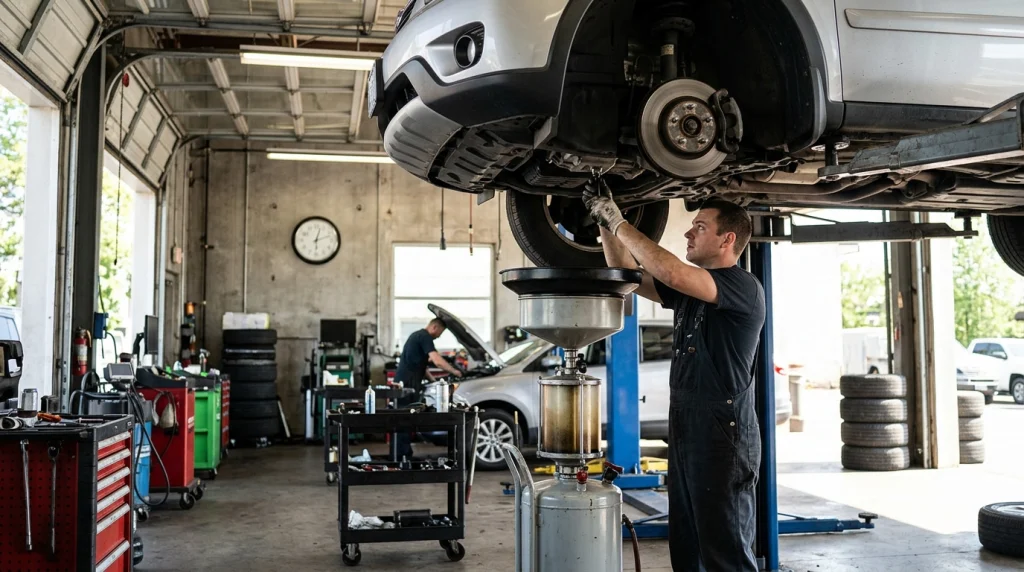
What to Expect During Your Oil Change
Typical Wait Time at Service Centers
The typical wait time at service centers for an oil change can vary widely depending on whether you choose a quick service or a more thorough inspection. While the actual oil change process might only take 10 to 15 minutes, the overall duration can extend due to customer volume. Quick lube places like Take 5 Oil Change often boast minimal wait times, but dealerships might have longer queues. Arriving during off-peak hours or scheduling an appointment are effective strategies to reduce your wait time and ensure a swift oil change experience.
Steps Involved in Changing Your Oil
The steps involved in changing your oil are fairly standard across most service centers. Here’s a breakdown of the process:
- The vehicle is lifted, and the old oil is drained from the oil pan.
- The technician removes the old oil filter and installs a new oil filter.
- New oil of the correct oil type is added to the engine, and the oil level is checked.
- Finally, a quick inspection might be performed, and the oil life monitor is reset, ensuring your engine’s health and confirming the use of clean oil.
Signs Your Vehicle Needs an Oil Change
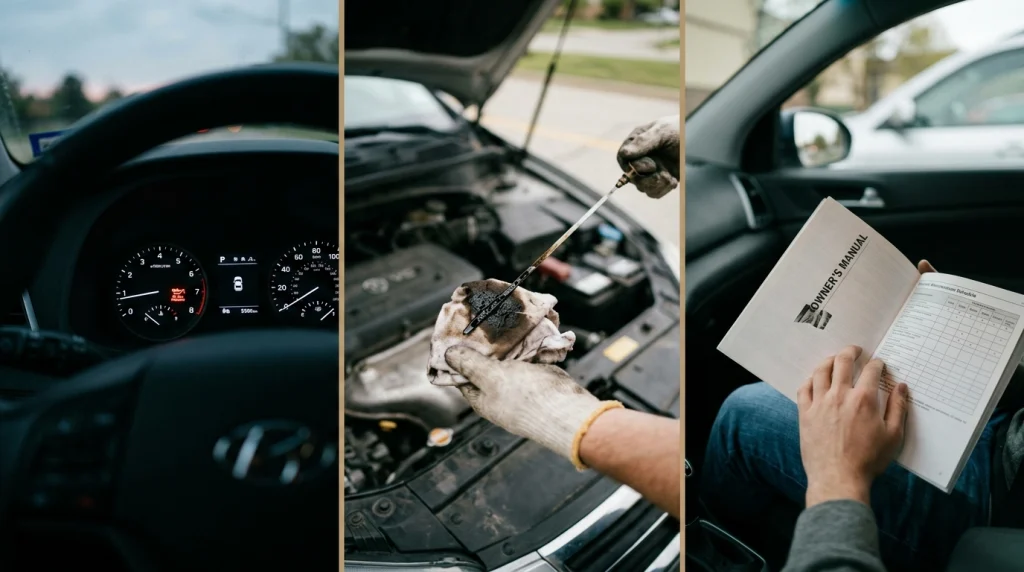
Key Indicators Your Engine Needs Fresh Oil
- Dashboard Warning Light: An illuminated oil pressure light or check engine icon signals low pressure or degraded fluid.
- Engine Noise & Ticking: Degraded friction protection leads to metal-on-metal contact, causing valve train ticking, knocking, or louder idling.
- Dark, Sludgy Texture: Fresh oil is amber and translucent; dirty oil turns black, thick, and gritty on the dipstick.
- Dropping Fluid Level: Consistently low levels on the dipstick indicate burning or leaking oil, requiring an immediate top-off and inspection.
- Exhaust Smoke: Blue or dark smoke from the tailpipe points to oil burning inside the combustion chamber.
Maintenance Best Practices
- Consult the Manual: Follow the manufacturer’s specific mileage or time interval (typically 5,000–10,000 miles for synthetic; 3,000–5,000 miles for conventional).
- Monthly Dipstick Checks: Inspect fluid levels and consistency at least once a month on a cold engine parked on flat ground.
Recognizing the signs your vehicle needs an oil change is crucial for maintaining engine health. Common indicators include a dashboard oil light illuminating, a ticking sound from the engine, a noticeable decrease in oil level, or dark and sludgy oil when checked with the dipstick. Adhering to the manufacturer’s recommended oil maintenance schedule, typically found in your owner’s manual, is the most reliable way to know when regular oil changes are due, regardless of how long an oil change takes.