The first generation of in-car alcohol sensors arrived in the 1990s as clunky, court-ordered boxes bolted under the dash — hardware that announced, loudly, that the driver had done something wrong. Three decades later, the same core function comes in a handheld unit the size of a key fob, wired discreetly into the ignition circuit and, increasingly, paired to a phone app.the Breathalyzer for Car Safety
An ignition interlock device prevents a car from starting until the operator provides a breath alcohol concentration test below a set level. That single sentence describes both the punishment model and the safety model — the difference is entirely who chose to install it.
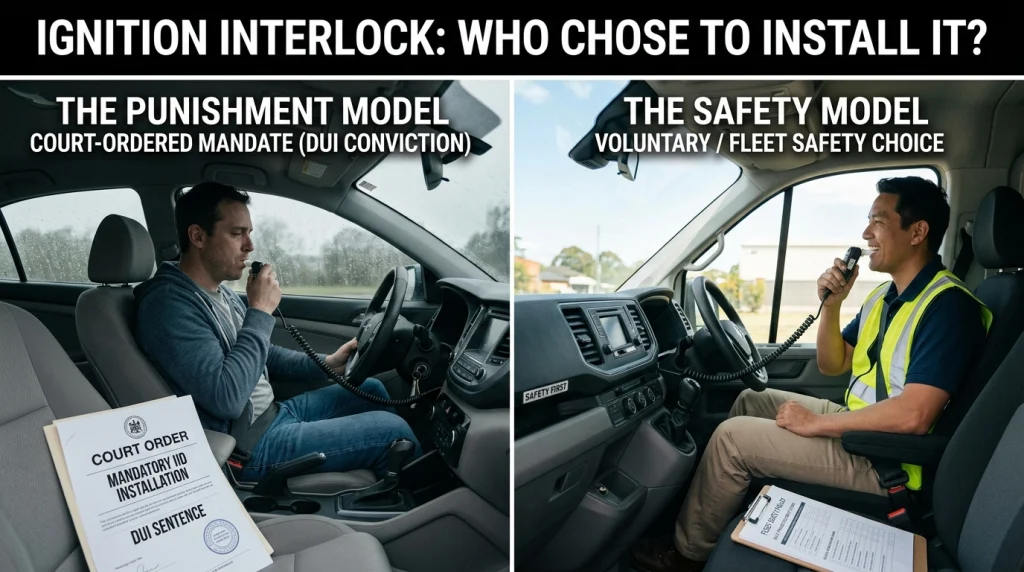
That choice is where the market is heading in 2026. A growing segment of owners is treating a breathalyzer for vehicle use the same way they treat a blind-spot monitor or a dash cam: a mechanical backstop against a moment of bad judgment, installed before anything goes wrong rather than after. For parents handing over keys, for small fleet operators, and for drivers who simply want a hard stop between a night out and the driver’s seat, the interlock is becoming a proactive safety asset rather than a sentence being served.
Can I Put a Breathalyzer in My Own Car Voluntarily?
Yes. No court order, no license restriction, and no state program enrollment is required to install a breathalyzer in car of your own. Any vehicle owner can contract directly with a certified provider, and installation follows the same process used for mandated units.
The appeal is straightforward: ignition interlocks reduce repeat DWI offenses by approximately 70% while installed — a level of effectiveness most aftermarket safety add-ons cannot claim.
Common voluntary use cases:
- Parents of teen drivers who want a zero-tolerance condition built into the car itself, not just into a conversation.
- Small fleet and contractor operations protecting equipment, liability exposure, and a company name painted on the door.
- Drivers in recovery who want an external checkpoint that doesn’t depend on willpower at 1 a.m.
- Multi-driver households where a shared vehicle is used by people with very different judgment.
The other decision is reporting. A monitored voluntary vehicle ignition interlock transmits test logs, failed attempts, and lockouts to a designated third party — often a parent or fleet manager. An unmonitored system simply refuses to start the engine and keeps the data local, which suits adults installing a device for their own benefit.
How Ignition Interlock Technology Works in 2026 : the Breathalyzer for Car Safety
Current units rely on electrochemical fuel cell sensors rather than the semiconductor sensors found in cheap consumer testers. A fuel cell oxidizes ethanol in the breath sample and generates a small electrical current proportional to the alcohol present. Because the reaction is specific to ethanol, the sensor largely ignores acetone, cigarette smoke, and the compounds in mouthwash or energy drinks that throw off lower-grade hardware.
The reading is then compared against a preset cutoff. Thresholds are usually set between .02% (20 mg/dl) to .04% (40 mg/dl) — well below typical legal driving limits, which is the point of a device built for prevention rather than enforcement.
Two practical concerns come up constantly. The first is the rolling retest: after the engine starts, the unit prompts for additional samples at random intervals so a sober starter can’t hand the car to an impaired driver. A missed retest logs the event and triggers the horn or lights — it never cuts the engine mid-drive.
The second is battery drain. Modern interlocks draw minimal standby current and enter sleep mode, though a vehicle already carrying a weak battery will expose that weakness faster.
The Real Impact on Road Safety and Fatalities
The population-level evidence is unusually clean for a road safety intervention. States that extend interlock requirements to every convicted offender rather than only repeat offenders see measurable declines in the worst outcomes: all-offender interlock laws reduce alcohol-impaired fatal crashes by 26%. That figure reflects deaths prevented, not citations avoided — a distinction that matters when weighing whether hardware belongs in a car at all.
Individual-level data tells the same story from a different direction. In controlled comparisons of drivers with and without an installed device, the interlock group reoffends at a significantly lower rate, while the non-interlock group reaches a recidivism rate of 31%. Roughly one in three drivers without the device returns to the same behavior; the group with a physical barrier between breath and ignition does not.
Read together, those two numbers make a case that extends past the courts. If a device that reliably blocks impaired starts is sitting in a car by choice, the risk profile of that vehicle changes — and insurers who already price dash cams, telematics, and advanced driver assistance into premiums have every reason to start pricing a car breathalyzer for vehicle ignition the same way.
hat to Expect: Installation, Costs, and Maintenance
Voluntary installation follows the same logistics as a mandated one, minus the paperwork. A certified technician mounts the handset within reach of the driver’s seat and wires the control module into the starter circuit — typically a same-day appointment.
Installation. A one-time setup fee covers labor, calibration, and a walkthrough of the blow-and-hum breath pattern the sensor expects. Nothing is cut permanently; the wiring is spliced in a way that can be fully reversed.
Monthly service. Interlocks are leased, not bought. The recurring fee bundles the hardware, data storage, and mandatory recalibration visits, usually scheduled every 30 to 60 days. Recalibration is what keeps the fuel cell accurate over time, and skipping it is the fastest way to get false readings.
Removal. When the device is no longer needed, the provider de-installs it and restores the factory ignition harness. Ask for written confirmation that removal was performed by a certified shop.
Tip: Verify that any unit you lease meets current federal model specifications for breath alcohol ignition interlock devices, and choose a provider with a local service center — recalibration appointments are frequent enough that distance becomes the real cost.
The Bottom Line: What You Need to Know
Four points cover most of what a prospective owner actually needs to decide.
- Voluntary installation requires no court involvement. Any vehicle owner can lease and install an interlock directly from a certified provider, which is why the device is shifting from a penalty into a safety purchase in 2026.
- The hardware is effective because it removes the decision from the driver. An interlock does not advise or warn — it withholds the starter until a breath sample clears the programmed threshold, which is why researchers consistently find sharply lower repeat-offense rates during the period a device is installed.
- Installation is reversible. The control module splices into the ignition circuit and the factory harness is restored at removal, so a properly installed and professionally de-installed unit leaves no permanent alteration to the vehicle.
- Compliant hardware is the whole ballgame. Fuel cell sensors that meet federal specifications and get recalibrated on schedule are what separate a reliable safety device from a novelty tester, and no cost saving justifies skipping that standard.
An interlock is a backstop for a bad night, not a license to plan around one.
Navigating the Market for Interlock-Equipped Vehicles
For used-car shoppers, a vehicle with interlock history is not a red flag in itself — it is a wiring question. Ask whether the removal was done by a certified installer, then check that the ignition harness looks factory, the starter engages normally without hesitation, and there are no abandoned splices or blank mounting holes near the steering column. A pre-purchase inspection catches all three in minutes. Sloppy de-installation, not the device, is what creates electrical headaches later.
Dealerships have the opposite incentive problem. Burying interlock history invites a difficult conversation at inspection; disclosing it, alongside documentation of professional removal, turns a perceived defect into evidence of a well-maintained electrical system. Some inventory managers are going further and listing voluntary interlock readiness as a feature for family and fleet buyers, which is where the resale conversation is heading.
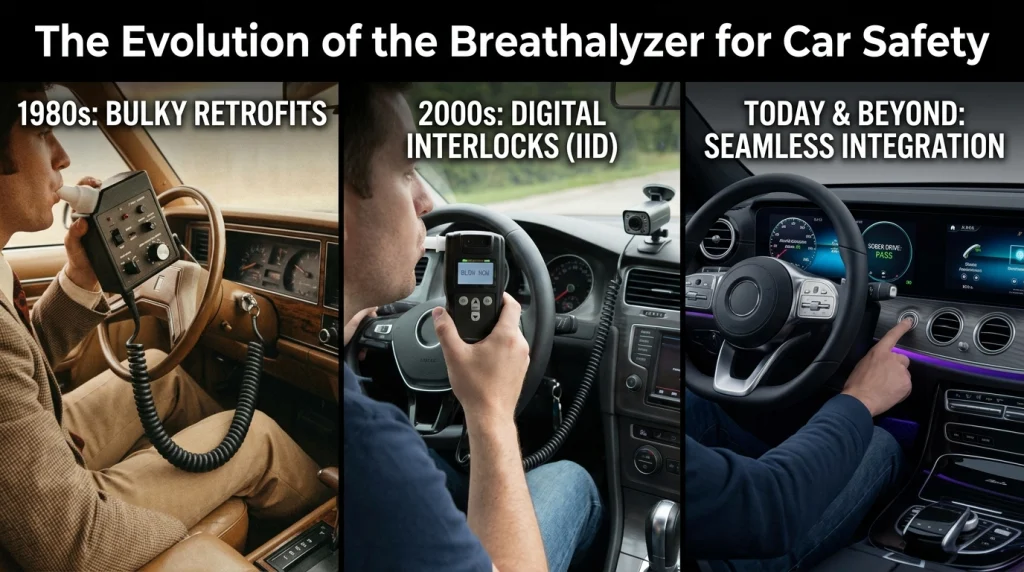
Shoppers prioritizing occupant protection should treat an interlock as one layer among several. Compare crash test ratings, standard automatic emergency braking, and driver monitoring systems across trims before adding aftermarket hardware, then use vehicle research and listing tools to confirm what a specific VIN actually came with.