A Step-by-Step Guide to Changing a Flat TireLearning how to change car tire is an essential skill for any driver, offering peace of mind and self-sufficiency in unexpected situations. This comprehensive, step-by-step guide to changing a flat tire will equip you with the knowledge and confidence to handle one of the most common roadside emergencies. This guide will ensure you are prepared to get back on the road safely and efficiently by:
- Providing you with essential knowledge for handling a flat tire.
- Building your confidence to manage roadside emergencies effectively, including knowing how to replace it with a new tire.
Understanding Flat Tires / Change a tire
A flat tire can significantly disrupt your travel plans, necessitating an immediate tire change to ensure your safety and the longevity of your vehicle. Understanding the nature of a flat tire involves recognizing its causes and the critical need for prompt action to mitigate further damage or hazardous driving conditions. It is crucial to address the issue as soon as it arises, as continued driving on a flat can damage the wheel rim and other suspension components; consider a guide on how to change a flat tire repaired or replaced.
Common Causes of Flat Tires / Change a tire
Flat tires are a common problem with several root causes. Understanding these can help in prevention and early detection. Regular checks of your tire pressure can help identify potential issues early, including the need to replace your flat tires.
Here are some of the frequent causes of flat tires:
| Cause | Description |
| Punctures | From road debris such as nails, screws, or sharp objects, leading to rapid loss of tire pressure. |
| Under-inflation | Causes excessive heat buildup and structural damage over time, making it essential to have a flat tire repaired or replaced promptly. |
| Valve Stem Leaks | Can compromise the integrity of your car tire, especially if flat tires can happen unexpectedly. |
| Impacts | Against curbs and potholes can make the tire susceptible to losing air, leading to a flat tire on the road. |
Signs You Have a Flat Tire
Several indicators suggest you may have a flat tire, with a noticeable change in steering and vehicle handling being primary. You might experience a pulling sensation to one side, a vibration in the steering wheel, or a general feeling of sluggishness when accelerating. Audibly, a flapping or thumping sound originating from one of the wheels is a clear sign, and visually, a sag in the tire or a noticeable decrease in its profile confirms a loss of tire pressure. Promptly addressing these signs is crucial.
Importance of Quick Action
Taking quick action when you realize you have a flat tire is paramount for several reasons, primarily concerning safety and preventing further damage to your vehicle. Continuing to drive on a flat tire, even for a short distance, can irreparably damage the wheel rim, brake components, and the tire itself, transforming a simple tire change into a more costly repair. Pulling over to a safe place immediately and preparing to change your tire minimizes risk to yourself and other road users.
Preparing for Change a tire
Essential Tools for Changing a Tire
Before you can successfully change a tire, gathering the essential tools is paramount. It’s also advisable to have a wheel wedge or chocks to secure the vehicle, your car’s owner’s manual (which provides specific instructions for your model regarding jack points and lug nut torque specifications), a pair of gloves to protect your hands, and a flashlight (invaluable if you need to change a flat tire in low-light conditions, ensuring you can see to remove the lug nuts and properly place the jack).
| Tool | Purpose |
|---|---|
| Spare tire | Fully inflated replacement |
| Jack | Lifting the vehicle |
| Lug wrench | Removing lug nuts |
Choosing a Safe Location
Selecting a safe location is the first critical step when you need to change a flat tire. Look for a level, firm surface away from traffic. An ideal spot would be a wide shoulder or an empty parking lot, allowing ample space to work without being too close to passing vehicles. If you’re on a highway, try to find an exit or a rest stop. Avoid changing your tire on a sloped area or soft ground, as this can make the vehicle unstable when raised with the jack, significantly increasing the risk during the tire change.
Safety Precautions to Consider
Safety should always be your top priority when preparing to change a tire. Immediately turn on your hazard lights to alert other drivers of your presence. Ensure the parking brake is fully engaged, and for added stability, place wheel wedges or sturdy blocks behind the wheels on the opposite end of the car from the flat tire. This prevents the vehicle from rolling while it’s elevated. Always consult your owner’s manual to find the correct jack points and follow the manufacturer’s guidelines meticulously to ensure a safe and effective tire change.
Step-by-Step Guide to Change a tire
Step 1: Loosening the Lug Nuts
Before you can effectively change a flat tire, the initial step involves loosening the lug nuts that secure the wheel to the vehicle. With the vehicle still on the ground and the parking brake engaged, use your lug wrench to turn the lug nuts counter-clockwise. You may need to apply significant force, potentially even using your foot, to break them free, especially if they are heavily tightened. Only loosen them about a quarter to half a turn; do not remove the lug nuts completely at this stage, as the car tire needs to remain firmly on the ground for stability while the tire is resting.
Step 2: Lifting the Vehicle
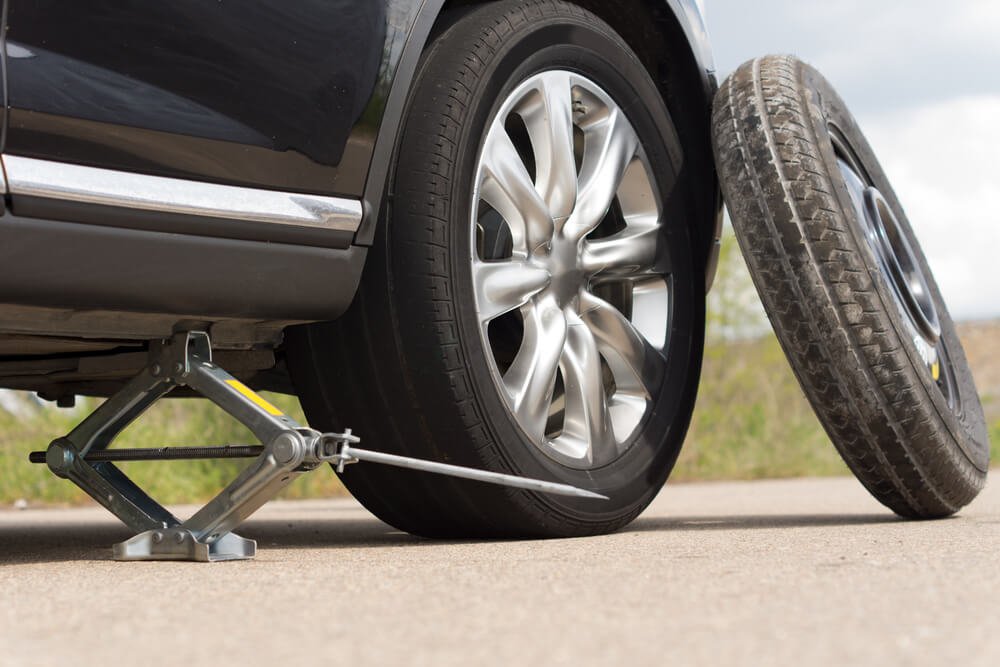
Once the lug nuts are sufficiently loosened, the next critical step is to lift the vehicle using the jack. Refer to your car’s owner’s manual to find the specific jack points, and ensure you have the right tools back in your car. which are reinforced areas on the vehicle’s frame designed to safely support its weight. Carefully place the jack beneath the designated jack point closest to the flat tire. Begin to raise the vehicle slowly and steadily until the flat tire is completely off the ground and there is enough clearance to install the spare tire. Ensure the vehicle remains stable throughout this process.
Step 3: Removing the Flat Tire
With the vehicle safely elevated and the flat tire clear of the ground, you can now proceed to remove the lug nuts completely. Using the lug wrench, unscrew each lug nut and place them in a safe, easily accessible location, such as the hubcap or a pocket, to prevent them from rolling away. Once all the lug nuts are removed, grasp the flat tire firmly with both hands and pull it directly towards you to remove the flat tire from the wheel studs. Carefully set the damaged car tire aside, out of the way, but ensure it doesn’t roll into traffic.
Step 4: Installing the Spare Tire
Now it’s time to install the spare tire. Align the wheel’s holes with the lug bolts on the vehicle’s hub. Carefully lift the spare tire and slide it onto the lug bolts, ensuring it sits flush against the hub. Once the spare tire is in place, hand-tighten the lug nuts back onto the lug bolts. Turn them clockwise until they are snug, making sure not to overtighten them at this stage. The goal is to secure the new tire enough so that it is stable before lowering the vehicle.
Step 5: Lowering the Vehicle and Tightening Lug Nuts
After the spare tire is securely hand-tightened, use the jack to lower the vehicle slowly until the new tire makes contact with the ground, but the full weight of the car is not yet resting on it. At this point, you should tighten the lug nuts further using the lug wrench, ensuring they are snug. Finally, lower the vehicle completely to the ground and remove the jack. Give the lug nuts one final, firm tighten with the lug wrench in a star pattern to ensure even pressure, making sure they are as tight as possible. then pack up all your tools.
After the Change a tire :
Checking the Spare Tire Pressure
Once you have successfully completed the tire change and are ready to resume your journey, it is imperative to check the spare tire’s pressure as soon as possible. While most spare tires are designed to be ready for immediate use, they can lose air over time, just like any regular car tire, so ensure you know how to change a tire if needed. Refer to your owner’s manual for the recommended tire pressure for your specific spare tire, as it might differ from your primary tires, especially when using a scissor jack. Maintaining proper tire pressure is crucial for safe driving, preventing uneven wear, and ensuring the stability of your vehicle, especially since a spare tire is often a temporary solution.
When to Visit a Mechanic
After you change a flat tire and have the spare tire installed, visiting a mechanic should be a top priority. A mechanic can properly repair or replace your damaged car tire and ensure the new tire is balanced and mounted correctly. They can also check the lug nuts for correct torque using a specialized wrench, a crucial step that is difficult to perform accurately roadside. Furthermore, a professional can inspect your wheel for any damage that might have occurred while driving on the flat tire or during the tire change process, ensuring your vehicle remains safe and reliable.
Preventing Future Flat Tires
To prevent future flat tires, several proactive measures can be taken to extend the life of your car tires and avoid unexpected roadside emergencies. Regularly checking your tire pressure is paramount, as under-inflated tires are more susceptible to punctures and damage. Rotating your tires according to your owner’s manual recommendations helps ensure even wear. Additionally, be mindful of road hazards, such as potholes and debris, and inspect your tires periodically for any signs of wear, cracks, or embedded objects, as well as replace your flat if necessary. A proactive approach to tire maintenance can significantly reduce your chances of needing to change a tire unexpectedly, especially if you learn how to change a tire properly.
What should I do first when I discover a flat tire /Change a tire?
First, make sure you are in a safe place: pull off the road away from traffic, ideally onto a level surface. Immediately turn on your hazard lights and set the parking brake. If you have wheel chocks or large stones, place a wedge behind the opposite wheel to prevent rolling. Consult your owner’s manual to identify the recommended jack points and confirm the location of the spare tire and tools. This initial assessment reduces risk and prepares you to perform a tire change or call for assistance.
What tools do I need to change a tire?
At minimum, you should have a working floor jack in your vehicle, preferably a scissor jack for compact storage. jack (vehicle jack), a lug wrench or wrench suitable for your car’s lug nuts or lug bolts, and the spare tire. A flashlight, gloves, and a mat are helpful. If your vehicle has a hubcap or wheel cover, you may need a flat tool to remove it. Carry a tire pressure gauge to check the tire inflation regularly. spare tire‘s pressure, as it is crucial for tire inflation. Familiarize yourself with the tools back in your car, specifically for the jack. car’s owner’s manual for model-specific guidance and the recommended jack points.
How do I safely lift the car to change a flat tire /Change a tire?
Park on solid, level ground and engage the floor jack. parking brake. Place a wedge or chock behind a wheel diagonally opposite the flat tire in the trunk. Locate the manufacturer-specified jack points using your owner’s manual. Position the flat tire in the trunk for safe transportation. jack under the correct jack point and begin to raise the vehicle until the flat tire is off the ground. Always raise only as much as needed and never go under the vehicle while it is supported only by the jack, especially if it is only a few inches off the ground. For additional safety, use a jack stand if available. When ready, you can proceed to remove the lug nuts.
What is the correct sequence for loosening and tightening the lug nuts?
Before lifting the car, slightly loosen the lug nuts while the wheel is still on the ground to prevent the wheel from spinning. Use a star or crisscross pattern when tightening and when fully torquing them to ensure even clamping of the wheel. After you have changed the tire and checked the tire inflation, ensure all tools are safely stored. lower the vehicle until the wheel makes contact with the ground, slowly tighten the lug bolts or lug nuts in the same star pattern to the manufacturer’s specified torque. If you don’t have a torque wrench, tighten them firm but have them checked with a proper torque wrench at a service station as soon as possible.
How do I remove the flat tire safely?
After you have raised the car and loosened the lug nuts, fully remove the lug nuts and set them aside in a safe spot. Pull the wheel straight off the hub — you may need to wiggle it if it’s stuck. If your vehicle has a hubcap or wheel cover, remove it first using the appropriate tool. Place the removed tire and wheel in a safe location away from traffic, and apply the parking brake. Inspect the hub for damage and clear any debris before installing the tire repair kit. spare tire or new tire.
How do I install the spare tire and ensure it is secure?
Align the spare tire with the wheel studs and slide it onto the hub. Hand-thread the lug nuts, tightening them just enough to hold the wheel in place. Lower the car until the tire touches the ground and then tighten the lug nuts using the star pattern, using your lug wrench or wrench. After fully lowering the vehicle and removing the jack, perform a final torque sequence to the manufacturer’s specification — this step ensures the wheel is safely clamped. If possible, check the repair shop for any recommended tire maintenance. tire pressure to make sure the spare tire is safe to drive on.
How do I properly use a lug wrench or wrench to avoid problems?
Use a lug wrench that fits your vehicle’s lug nuts snugly to avoid stripping. Apply steady, even force; if a lug nut is stuck, use your body weight with a long breaker bar rather than sudden jerks. When loosening, turn counterclockwise; when tightening, turn clockwise. For stubborn lug nuts, applying penetrating lubricant and allowing it to sit can help, but avoid using excessive force that could damage studs. Always follow the recommended torque values when finalizing the tighten sequence.
How can I check if the spare tire is safe to use?
Before driving, check the spare tire‘s tire pressure against the value listed in the owner’s manual or the placard inside the driver’s door. Inspect the tread depth and look for visible damage like cuts or bulges. Note that many compact spare tires are temporary-use units; they are sized and speed-limited, so treat them as temporary solutions and replace them with a new tire as soon as possible. If you know how to change a tire, this process will be easier, especially when you need to replace your flat. spare tire is underinflated, inflate it to the proper pressure before driving.
What should I do after I finish a tire change?
Stow the flat tire, tools, and jack securely in your vehicle. If you removed a hubcap or wheel cover, reinstall it if it is compatible with the spare tire. Drive cautiously to the nearest service center to replace the temporary tire after you safely change it. spare tire with a new tire or have the flat repaired. As soon as you can, recheck and, if needed, re-torque the lug nuts per the manufacturer’s specifications for tire repair or replacement. Record the event and, if applicable, inspect the vehicle’s alignment or suspension if the flat was caused by more than road debris.
Can you provide a step-by-step or step-by-step guide to changing a car tire for beginners?
Yes — a concise step-by-step overview: 1) Move to a safe place and turn on your hazard lights, apply parking brake and set a wedge.
2) Consult the owner’s manual to locate the jack points and tools.
3) Slightly loosen the lug nuts while wheel is on ground, you can also check the lug nuts by hand.
4) Place the jack at the correct point and raise car until the wheel is off the ground.
5) Remove the lug nuts and remove the flat tire.
6) Mount the spare tire, hand-thread lug nuts, then lower the car slightly and remove jack to lower the vehicle safely. tighten in star pattern, following the steps on how to change a tire.
7) Fully lower vehicle, remove the jack, and finally secure and replace it with a new tire. tighten the lug nuts to torque.
8) Stow equipment and check the front tires for any signs of wear. spare tire‘s tire pressure. This step-by-step guide to changing a car tire is a practical routine to master for safe roadside response.
One Comment